

What To Put In Your First Person Sermon
What To Put In Your First Person Sermon
We are in a series of posts describing how to create and perform a first person sermon. Here’s the first in the series. In this post I want to consider what to put in your first person sermon that will engage your hearers.
The Beginning of the First Person Sermon.
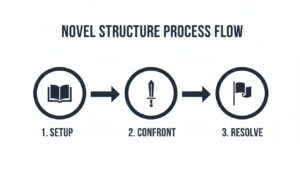
I find it helpful when constructing a first person sermon to think of it in terms of a well-written novel. Here is how some writers describe the flow of their writing:
A Simple Formula
Many novelists summarize the flow this way:
Character with a goal → faces escalating obstacles → suffers major failure → grows through the struggle → makes a decisive final choice → lives with the consequences.
That pattern underlies countless memorable novels, from Pride and Prejudice to The Lord of the Rings, To Kill a Mockingbird, and The Hunger Games. The details differ, but the progression from disruption through transformation to resolution remains remarkably consistent.
 Let’s put the Apostle Peter’s story into this flow. What was Peter’s goal at the beginning of his engagement with Jesus? He was just trying to get by as a fisherman in the first century. Not an easy task with taxes being what they were. Then Jesus shows up and now he faces new choices. He is growing through the struggle, but when Jesus is arrested, he runs, Then he denies that he even knows Jesus. What a failure! Imagine the news of the resurrection, but you are both hopeful and fearful. What will Jesus say to him. Then there is the restoration of Peter as recorded in John 21. Powerful stuff for a first-person story.
If you were to make a first person message about Peter’s life there are great moments that people can connect with, failure that almost everyone can connect with, and a resolution that ends with his death on the cross. According to tradition, he asked to be crucified upside down because he was unworthy to die the way his Savior died. Again, think about what to put in your first person message for your people. Do they deny Jesus?
Make Sure You Connect With Your People
The first person sermon has to connect with the struggles of your people. Where are the connection points in the story you tell? What do you want people to remember? How do you want them to be moved? Remember, emotion is your friend in a first person sermon. How does the struggle of your character relate to the people who hear you? Make sure there are connection points.
An Example
Below is an example of a pastor who made a first person message about Peter, the Apostle. Listen through it, and then do an evaluation. How did the story told connect to your story? What emotions were pulled? How did Peter’s choices mirror yours?

