

The Prestige Challenge for Preaching

The Prestige Challenge for Preaching
 I was on an airplane recently, and had a wide choice of movies to watch to pass the time. I chose one that seemed to have a redeeming theme, and even promised a kind of “Christian” under theme. So, I watched. It was depressing, to say the least. The worship service displayed a preacher that was woefully out of touch, and Christianity was displayed as out of date and out of touch. To my chagrin, the movie won the best picture award Oscar.
Think about it a moment. When was the last time you saw a movie where a preacher was displayed positively. You’ll find it tough, I think. What a change in my lifetime! When I entered ministry, Pastors were highly thought of. Now, according to a survey that I recently read, Pastors are considered less trustworthy than: Nurses (they rank at the top of the trustworthy scale); Doctors; Pharmacists. One survey showed that only about 18% of the people surveyed listed pastors/preachers as highly trustworthy.
Here’s another survey by Lifeway Research that is a little more up to date.
The reasons for this are rather clear. The scandals of the 1980’s and 90’s with prominent tele-evangelists being revealed as sinners even worse than the rest of us.
In a 2003 study, the Gallup organization asked 1200 teens between the ages of 13 and 17 what they wanted to be when they grew up. Here’s the top 10:
- Doctor/Nurse/Medical 10%
- Teacher. 8%
- Computer field 6%
- Athlete 5%
- Lawyer and Veterinarian. 4%
- Engineer 3%
- Chef 3%
- Musician. 3%
- Musician 3%
- Military 3%
- Mechanic 2%
(Gallup J. Mazurca, “Teen Career Picks,” May 13, 2003)
How’s Your Prestige?
You preach in this society! You are trying to build a church in a time when the church, generally speaking, is on the decline. One study showed that 40 million people have left church since the year 200. You are facing the prestige challenge for preaching if you are someone who speaks regularly to a congregation and seek to serve in a community.
Facing The Prestige Challenge for Preaching
You might be thinking at this point, “Why didn’t I go into counseling?” Yet let me remind you that there are signs that God might finally be bringing the revival that I’ve been praying for over 35 years. What are those signs?
1. Increased Interest in Spiritual Matters Among Young Adults
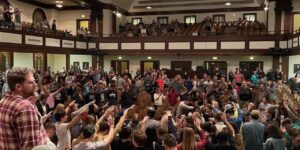
The Asbury Revival
Several surveys have found that members of Gen Z are more open to discussing spirituality than many expected. While not necessarily returning to traditional church attendance in large numbers, many are asking questions about faith, purpose, and the Bible.
2. Campus Prayer and Worship Gatherings
The 2023 Asbury University revival in Kentucky drew national attention when a chapel service continued for weeks, attracting tens of thousands of visitors. Similar prayer and worship gatherings occurred at other colleges and universities afterward.
3. Reports of Increased Baptisms
Some churches and ministries have reported unusually large numbers of baptisms in recent years. For example, several large churches and campus ministries have described significant increases in professions of faith and baptisms.
4. Growth in Prayer Movements
National and local prayer initiatives continue to attract participants. Organizations focused on prayer, fasting, and spiritual renewal have reported growing engagement, especially through online platforms.
5. Renewed Interest in the Bible
Bible sales and usage have shown periods of growth, particularly during times of cultural uncertainty. Publishers and Bible-app developers have occasionally reported increased engagement.
6. Dissatisfaction with Materialism and Secularism
Historically, revivals often emerge when people become disillusioned with prevailing cultural values. Many observers note a growing search for meaning, community, and transcendence amid rising loneliness and anxiety.
7. Cross-Denominational Cooperation
In some regions, churches are working together for prayer, evangelism, and community outreach rather than focusing primarily on denominational differences. Such unity has often preceded revival movements in the past.
So What Now?
Here’s the challenge as you face the prestige challenge for preaching: When people do take the risk of coming to church, are they being challenged, are they getting engaged because your preaching hits home to them? That’s a big challenge! One we’ll continue to reflect on in this blog.

