

Models of the Preaching Event
Models of the Preaching Event
In this post I want to look at models of the preaching event. We’ve been considering the possibility of adding more conversational elements to our preaching. The first post in the series is here.
Older Models of Communication

Hitting the target
Early books on communication give us images that maybe don’t quite fit anymore. For instance, one of the early models for communication is that of the bow and arrow. The speaker is the sender of the message, and in the model he/she is holding the bow. The message is the arrow. The listener is pictured as the target. The goal of the archer is to hit the target with his message.
Thankfully, later writers and thinkers came up with a more appropriate model of interpersonal communication. The new image suggested that interpersonal communication. The new model looks more like a tennis match. One person (in preaching the preacher is this part of the model) lobs a thought or statement to another person and then that person returns the message or statement in a way that tells the server that he/she was understood.
Later theorists expanded on the tennis model to indicate that many things can be considered in the delivery of the message. A man named Kehoe described it as noise, and the message includes things like emotions, as well as things that are experienced by our senses. Below is an image that tries to capture Kehoe’s writing on this subject.
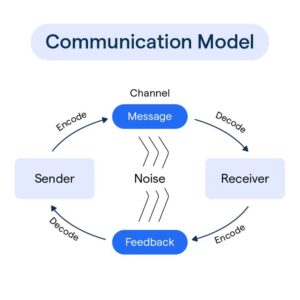
Note the idea of noise. This is anything that can get in the way of the message. It may be distraction, or lack of context on the part of the receiver.
What does this have to do with models of the preaching event?
You may be wondering at this point what all this has to do with models of the preaching event. The archer model fits well with most preaching classes. The preacher’s job was to send the arrow. Hopefully, itwould hit the target in the hearer, but that was less important. Many, Many posts ago I shared a mentor’s evaluation of my first sermon in the church where I was interning for a summer. He said, “That sermon would fit in seminary. Everything you said was true, but after the first five minutes nobody was listening.”. Ouch! But he then evaluated the other sermons preached that summer from that context. How will the hearer receive the message? The idea of illustrations, stories, emotion, etc. all began to enter into my preparation for my message.
As you probably can tell by now, this is really the heart of conversational preaching. It’s not like the proverbial pigeon idea of speaking, where we drop the message and then fly away. Rather, there needs to be opportunity for feedback to let us know that the message is hitting home. That a requires feedback so that we know we are getting through the noise.
Think about this. Do you know that your message is getting through? Do you know that it is hitting home? At one point in my ministry I was a mentor for seminary students who interned in my church. I found it helpful to develop an evaluation form. This form was handed out to a random 10 or 12 people who then turned it in to me. The questions included observations of the physical presentation as well as appropriateness of the message for the evaluator’s life. You may want to consider doing this for a time in your church in order to make sure that among the modes of communication you are practicing one that ensures that the message you send is heard and applied to heart and mind. There are models on-line in many places for you to consider and modify.

