
Learning To Communicate
Learning To Communicate
In the last post I introduced the idea of learning conversational preaching skills. In this post we’ll consider the steps in learning to communicate that we’ll apply to our preaching.
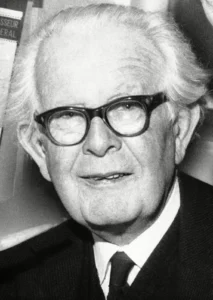
Jean Piaget
From the moment we are born human beings begin a journey of learning to communicate our wants and needs. Jean Piaget was one of the early observers about how we learn to communicate. He proposed four stages that human beings go through as we learn to communicate our wants and needs. The chart below outlines the stages and why we learn in each one.
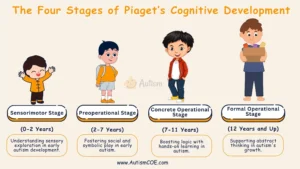 Piaget’s theory emphasizes that children are active learners, not passive recipients of knowledge. Cognitive development occurs through schemas (mental frameworks), assimilation (fitting new information into existing schemas), and accommodation (modifying schemas when new information doesn’t fit). The process of equilibration drives children to balance their understanding with new experiences, leading to increasingly sophisticated thinking. Jean Piaget Stages Of Cognitive Development
In stage 1, children learn through touch. Gradually they begin to understand what language is and what words mean. In his book on Conversational Preaching William Browned tells about his young 19 month old grandchild who has progressed from noises to saying, “Iwandat”. The parents (and grandparents) are then left trying to interpret what “that” is.
I’ve included this information about Paiget because it is foundational to understanding conversation, but also to have you think about children sermons. Many of us are expected to provide this at some point in our ministry. Watch the language you use!
Learning the Language Around You.
As you may have guessed, the secret of conversation is to have an exchange of ideas using language that everyone involved has the same interpretation for. There are hundreds of examples where a preacher uses language and ideas that are deeply theological. Maybe this is done to impress an audience with erudition. But if the audience members, the other part of the communication process, don’t understand, communication. won’t happen. So, it behooves you to follow the steps in learning to communicate. Set up some kind of process where you ask those who will honestly respond, how you are coming across. Like the baby and then toddler, begin to mine the language of your congregation.
And here is another note. I listen to quite a few sermons these days in my “retirement”. I am amazed at a preacher who will assume that everyone in the audience has their background. For instance, one preacher referred to his denomination owned college and said, “You may remember the chapel services at _______ college.” There is so much wrong with this. One of the biggest things is that a far larger percentage of the people in that church didn’t go to his college. They had no frame of reference for the statement. Worse still, this poor communication created a line, a wall. Now the congregation was divided between those inside the circle, who knew what the pastor was talking about, and those who didn’t. This kind of thing can have consquences for the health of the church.
Learning the Language Where You Are
This will require you to listen, to get feedback. I remember in my first church, in a small, semi-rural community, I formed a sermon creation group. This group of people met with me every couple of weeks. I would talk over the upcoming sermons, and then would ask them for examples, for stories within that church. It was an invaluable way for me to learn the language of that particular congregation. People began to notice that I was “one of them”. And they began to invite their families and neighbors. It started when I began learning to communicate where I was. Getting such input in some way is essential.
Conclusion
Learning to Communicate is not really difficult, but it does require some work, learning the culture and finding a way to give people the opportunity for input into your messages. The rewards will be amazing.

