
The Skill For Preaching of Identifying the Central Idea
The Skill for Preaching of Identifying the Central Idea
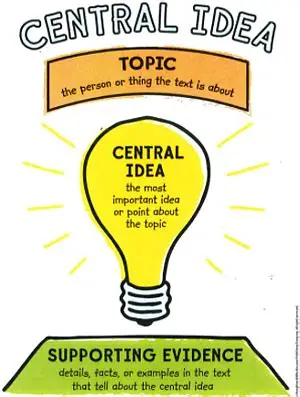
In this series of posts we are exploring the basic skills that we can develop to become great preachers. In this post we are going to consider the skill for preaching of identifying the central idea of your the message. This is one of the greatest skills you can work on to improve your preaching. Let’s explore what this means.
Identifying the Central Idea
Version 1.0.0
When Wayne McDill explores this skill in his book, The 12 Skills for Great Preaching, he says that this is the hinge skill. Why? Because everything else in your sermon development hinges on this idea.
So, what is the central idea of a passage? Here’s how McDill describes it:
The central idea is the single, dominant meaning of the biblical text—what the author is saying, not everything the passage could say.
To identify what the central idea is, you have to analyze the text. What is the main idea? Are there repeated ideas? What is the author’s central concern?
Boiling It Down To One Sentence
This is where the real skill comes into play in your sermon preparation. A couple of things to note about this. When you develop your sentence make sure you are not just stating a topic that the passage suggests to you. Rather, think in terms of what the author says about that topic. Let me give you an example.
Text: Psalm 23
-
Subject: What the Lord does for His people
-
Complement: He faithfully provides, guides, and protects them
Central Idea:
Because the Lord is our shepherd, we lack nothing essential for life.
Notice there are two parts to the central idea: the subject and the complement.
When you can boil down your message to one sentence, you can begin to consider how best to outline the message, what illustrations are appropriate, etc. Everything in your message relates back to the central idea.
Another Example
 I’m working on a sermon right now on 1 Corinthians 2:1-5, where Paul says:
When I came to you, I did not come with eloquence or human wisdom as I proclaimed to you the testimony about God.[a] 2 For I resolved to know nothing while I was with you except Jesus Christ and him crucified. 3 I came to you in weakness with great fear and trembling. 4 My message and my preaching were not with wise and persuasive words, but with a demonstration of the Spirit’s power, 5 so that your faith might not rest on human wisdom, but on God’s power.
The central idea sentence that I’m working with is this one: The cross is the heart of the Christian message.
The complementary idea here is that we in the church must focus on the cross of Jesus. This is where the power of God is released into our presence and our world.
The Implications of the Central Idea
Once you have the central idea you can move on to develop the message. In the body of the message I’m going to describe how we tend to push the cross to the background and become advocates of self-help with a few tips on how to do that well.
But with the cross in the center we can’t escape the reality that we are sinners, such bad sinners, that there is no hope for us aside from the shed blood of Jesus Christ. We can’t imply to people that we are “good”, because we aren’t. We, like all people, are sinners who are worthy of hell.
Therefore, it is essential to come to the cross.
Conclusion
The skill for preaching of identifying the central idea in your message will improve your preaching. Practice it. For fun and application, consider this short clip of a message by Alistair Begg. I’m going to use this in my message of the cross as well.

