

The Skill of Organizing Your Sermon

The Skill of Organizing Your Sermon
We have been considering the basic skills to work on that will improve our preaching. We are loosely following the book by Wayne McDill, The Twelve Essential Skills for Great Preaching In this post we are going to look at the skill of organizing your sermon. The first of these posts is found here.
Where Does The Organization Come From?
Here are some general statements of how to go about the organizing of your sermon.
First of all, the organization should come from the text.
Secondly, it should build toward the central idea of the text.
Thirdly, the organization should help to make the message memorable.
Fourthly, the organization should be simple and clear.
Fifthly, the organization of your message should build toward the central idea.
Some Examples
Here are some examples from McDill’s book:
If the sermon idea is:
“True humility means putting others ahead of yourself.”
Then each point should move that idea forward.
Example:
Text: Philippians 2:3–8
Sermon Idea:
Christ shows us what humility looks like.
Organization:
-
Humility rejects selfish ambition (v.3–4)
-
Humility follows Christ’s mindset (v.5–7)
-
Humility sacrifices for others (v.8)
Each point advances the same idea.
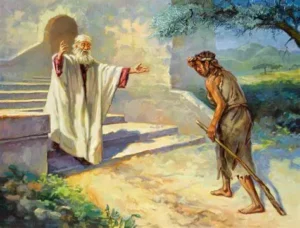 Text: Luke 15 (Prodigal Son)
Instead of chronological storytelling only, you could organize around spiritual movements.
-
The rebellion of the son
-
The repentance of the son
-
The restoration by the father
The sermon moves toward grace.
Do you see the movement of his examples? Do you see how the skill of organization your message can add to its impact?
The KISS of Sermon Organization
You’ve likely heard of KISS. It stands for Keep It Simple Stupid. In other words, avoid complexity. The listener should be able to remember your main points. Some preachers like to start each point with the same letter. That is helpful to some, but not necessary.
 I’ve been practicing the skill of organizing your sermon lately. Consider the example I’ve been using of a sermon that I preached yesterday based on 1 Corinthians 1:26-2:5. I decided to go with only two points, with the central idea being that the cross should be central in our life and especially in our church life. The two points I went with are these: Point 1: The cross teaches us something about ourselves. That listing of who responds to Jesus is powerful:
God chose the foolish things of the world to shame the wise; God chose the weak things of the world to shame the strong. 28 God chose the lowly things of this world and the despised things—and the things that are not—to nullify the things that are, 29 so that no one may boast before him.
In other words, no one can boast. Those that understand the cross well know that we have nothing to boast of before God.
Building the Sermon
But this is challenging, you see, because we are not the uneducated, poor people. When God has given us education (wisdom), resources, and opportunity, we can think of ways that we think God might be impressed. Think of the Pharisee in Jesus’ parable of the Pharisee and the tax collector praying in the temple (Luke 18). The Pharisee was a moral man. He lived trying to keep all of God’s commands, but along the way, he thought he could impress God. “God, I thank you that I’m not like other people”.
I imagined us standing before God and hearing the question that the program Evangelism Explosion taught us to use: If you were to die tonight do you know that you would go to heaven?; And, If you were to stand before God and he would ask, “why should I let you into heaven,” What would you say? The most frequent answer to question 2 was, “I live by the Ten Commandments and the golden rule.
I used the example of Alistair Begg that I shared a couple of posts ago. You cannot begin the answer to that question with anything that starts with “I”.
Second Point
The second point in my message was that the cross also tells something about God, that he loves. us more than we can imagine. Here’s a link to me preaching this message.
Do you get the idea? I ended the message with a two-step application: 1 This is true personally. Learn it. But it is also applicable to our church life? Why is the Christian church doing so poorly here in the US? One reason, I think, is that we have presented to the world that they are bad, and we are good. They think we’re too good to know their struggles, and we are quick to condemn their sins. Let’s let them know that we are all sinners here.
Conclusion
Practice the skill of organizing your sermon, and your preaching will improve.
