

First Steps in First Person Preaching

First Steps in First Person Preaching
In the last post I introduced the idea of doing first person preaching, that is, becoming a character in the narrative parts of the Bible. In this post we are going to consider the first steps in first person preaching that will make an impact on your congregation.
But before I get to those steps, just a reminder of how powerful this can be. People love stories. And, if the surveys are true, people are tuning in regularly on the tv to their favorite on-going stories. Then they come to church on Sunday, and stories are rare. Let’s change that.
A New Look At History
For most people, history was a boring subject in school. I remember memorizing dates and facts for a test. One of my professors in college changed that for me. Rather than just considering the significant dates and facts, he introduced me to the flow of thoughts and ideas for a period. That flow of thoughts was now presented in a way that made the flow of history make more sense.
Don’t get caught up in the “facts”.
 When we approach the history books in the Bible, it’s easy for those of us who loved history to get caught up in the facts. Those are interesting to those who loved history in school. It is less so for those who didn’t, the vast majority of your listeners.
When we consider the first steps in first person preaching, the first step is to step back from the facts to the feelings of the people in the narrative. This doesn’t mean that you ignore the facts. You can even include them in the presentation that you craft.
So, how do you begin your sermon preparation for a first person sermon? Do your exegetical work. Look at when the book was written that you are going to draw a story from. You don’t have to worry about the little details like dates. But who wrote it? What is the flow of the overall story that God is telling in the Scriptures?
Look for the events that surround your story, the things that impacted your character. For instance, in the book of Ruth there is a little statement in chapter 4 that says,
Now in earlier times in Israel, for the redemption and transfer of property to become final, one part took off his sandal and. gave it to the other. This was the method of legalizing transactions in Israel.”
That little fact sets the stage for what is about to happen that Boaz sets the stage for marrying Ruth.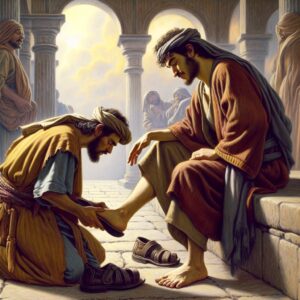
Who is the target audience of the book? In other words, why did God include this book in the canon where he tells the story that leads to Jesus. The only guidance I got about teaching from the Old Testament that I can remember from my seminary preaching class was that we draw a straight line from the text to Jesus. That’s okay, but in first person preaching we have to focus more on what God was doing and communicating to a group of people at a particular time and place.
Set your person in the context
 The next step is to put your person into the context that you have discovered in your research. What would they think and feel in the times with the things that were going on. Admittedly, you may be off a bit since you can’t interview the person. And your interpretation can be inspired as you pray for insight into what God was saying back then. What is this person thinking? What are they feeling?
I did a sermon once at Christmas time and became Herod the king. There was just a ton of material that I could weave into the story. The political situation with Rome, Herod’s relationship with Pilate, etc. I could easily project what it must have been like for Herod to face the judgment of Jesus.
Conclusion
These are the first steps in first person preaching. We’ll continue this in the next post.

