

The Preaching Skill of Examining the Text

The Preaching Skill of Examining the Text
We are in a series of posts considering the essential skills that we need to develop for great preaching. In this post we will look a the preaching skill of examining the text that we are going to preach on a particular day.
Looking At the Text
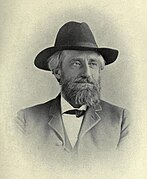 Nathaniel Shaler is well-known in the scientific world for his writing and teaching about the geology and theology of the theory of evolution. He is especially known for his great skill at observing the world around him and writing about it. His great skill of observation, he said, began with his professor when he was a freshman at Harvard. Louis Agassiz opened a specimen jar in an empty lab and gave Shaler an assignment. “You are to examine this fish and record everything you see.” Agassiz warned him that he was not to talk to anyone, but simply observe everything he could about the smelly fish. Seven days later Agassiz returned for the report. For a whole hour Shaler reported his observations. At the end of the hour Agassiz said, “That’s not right.” So Shaler went back to the work of observation. Ten days later he finally gave a report that satisfied his professor. (This account is in The 12 Essential Skills for Great Preaching, p. 17-18). It was this skill, Shaler claimed, that allowed him to become one of the best-known scientists in America in his day.
How Do You Examine The Text?
 How do you go about preaching? The more skillful you are at considering the text, the better preacher you will be. So, how do you go about that? There are many strategies that will help you with this. If you have been to seminary, you probably studied Old Testament Hebrew and New Testament Greek. I did that. In fact, I majored in Greek while an undergraduate. My reasons weren’t very pure. I liked electives, and if I met all the pre-seminary requirements, I would only have 3 electives over four years. So, I chose to major in an area that requires 8 classes. That freed up 5 more open spots for electives. I rarely would get out my Greek New Testament to look at a text. So, what is helpful? Here are some things I found helpful.
- Prayerfully read the passage you are going to preach on.
- Outline the text so that you separate the major thoughts from the minor ones.
- Reflect on how the main points of the text resonate with your audience.
- Consult good commentaries to learn the background to the text.
- I always found it helpful to reach other peoples’ sermons on the passage.
From Examination To Writing
Once I had the main ideas of the text, and had observed everything I could pull out of it, I would begin to write. As you’ve read in other places in this blog, it is very helpful to develop a main point that is going to be the driving force of your message. That main idea will help you choose introductions that will catch peoples’ attention, and focus it during your message.
Warning: Make Sure the Main Point Is the Main Point
I’m thinking right now of a message that I heard several weeks ago. The text was one of the parables of Jesus, specifically, Luke 11:1-18. A parable is, as you may have heard, an earthly story with a heavenly meaning. The earthly story of this parable is of a man who has someone visit unexpectedly, and he doesn’t have the resources to feed the family–something required in near eastern hospitality at that time. So, he goes next door and badgers his neighbor until he gets up and gives him the bread that he needs.
The point of the parable is that this is not how God is with us. Rather, “Ask and it will be given you, seek. and you will find, knock and the door will be opened to you.”
The main point is that when we pray, God is always responsive to our pleas. But the preacher that I listened to made the message about being more hospitable. In other words, he focused on the earthly story, not the heavenly meaning.
The preaching skill of examining the text will keep you from wandering off into rabbit holes, and will hammer home God’s message from that text.

