

The Skill of Bridging from Text to Sermon
The Skill of Bridging from Text to Sermon

We are considering various skills that we can work on to improve our preaching. The first post in this series is here. In this post we’re going to consider the skill of bridging from text to sermon in your sermon preparation.
Definition of Bridging
A Bridge connects one place to another. When we apply this to preaching we mean that we need to create a bridge from the ancient text, i.e. what the text meant then in the world of the Bible, to what it means in our contemporary world.
How to Build A Bridge from Text To Sermon
 Here is where you begin to build on the skills you’ve been working on. If you have named the textual idea, you now take that realization and build on it. What is the text’s central theological idea? What did the original author intend for people to think, feel or do?
Once you answer those questions you begin to ask another set of questions: How does this truth apply in our contemporary world? What does God want your people to think, feel or do?
A warning here. Don’t make this jump too quickly. Sometimes you want so badly to get a theme across to your people that you will jump here beyond the text to your pet theme. Fight that temptation.
Build Your Sermon Around the Bridge
Take your information gained by answering these questions, and build your message around it.
An Example of Bridging from Text to Sermon
Here is an example of how this works:
Example: The Cross In The Center
I’m working on a sermon for this coming Sunday that I’ve title: The Cross In The Center. The text that I’m working with is 1 Corinthians 1:26-2:5. Here is that passage.
26 Brothers and sisters, think of what you were when you were called. Not many of you were wise by human standards; not many were influential; not many were of noble birth.27 But God chose the foolish things of the world to shame the wise; God chose the weak things of the world to shame the strong. 28 God chose the lowly things of this world and the despised things—and the things that are not—to nullify the things that are, 29 so that no one may boast before him. 30 It is because of him that you are in Christ Jesus, who has become for us wisdom from God—that is, our righteousness, holiness and redemption. 31 Therefore, as it is written: “Let the one who boasts boast in the Lord.”[a]
2 And so it was with me, brothers and sisters. When I came to you, I did not come with eloquence or human wisdom as I proclaimed to you the testimony about God.[b] 2 For I resolved to know nothing while I was with you except Jesus Christ and him crucified. 3 I came to you in weakness with great fear and trembling. 4 My message and my preaching were not with wise and persuasive words, but with a demonstration of the Spirit’s power, 5 so that your faith might not rest on human wisdom, but on God’s power.
The ancient truth here is that people gave in to pride, and thought that they were better than others. There is an easy bridge to today. We still do this today. Not too long ago I sat in a group of ex-convicts as they worshipped, and I felt superior–until the Spirit pointed out to me that I was no better than the Pharisees of Jesus’ day.
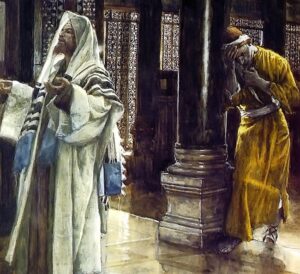 Paul the Pharisee knew this trap. Remember the Pharisee in the parable in Luke 18 of two men who went up to the temple to pray, one a Pharisee and the other a tax collector. These were the opposite poles of society of that day. The Pharisee prayed:
10 “Two men went up to the temple to pray, one a Pharisee and the other a tax collector. 11 The Pharisee stood by himself and prayed: ‘God, I thank you that I am not like other people—robbers, evildoers, adulterers—or even like this tax collector.12 I fast twice a week and give a tenth of all I get.’
I titled this message: the Cross In The Center. In other words, we need to keep the cross at the center of our beliefs. Why? The cross tells us a great deal about ourselves, that we’re not as good as we think. And it tells us something powerful about God’s love–that he loves us more than we can imagine.
Conclusion
This skill will add life to your preaching. Practice it well.
