

Asking the Right Questions for Preaching

Asking the Right Questions for Preaching
We are in a series of posts on skills that you need to become a great preacher. The first post in the series is here. After considering how to get the text in your mind, and making observations about the text the next skill is asking the right questions for preaching as you think about presenting the truths you’ve uncovered to your audience.
The Basic Questions
The basic questions begin the process of interpretation. To Interpret means “to explain the meaning of something.” In order to to explain the meaning of anything, you must first examine what you want to interpret. When you examine it, you come to understand it fully, and then go beyond that to the significance for yourself and/or your audience.
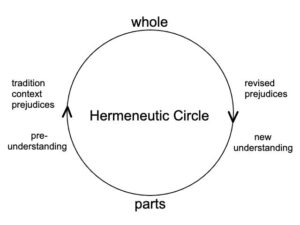 As an aside, the interpretation of the Bible is often called Hermeneutics. The name comes from the Greek god, Hermes, who saved as the messenger for the other gods. So, when hermeneutics if applied to the Bible, it means that we interpret the meaning of a part of the Bible, revealing not just what we have noted, but revealing its significance for our listeners. In MicDill’s book, he points out that the three basic questions that we use to interpret a variety of knowledge are these:
- What do we have here?
- What does it mean?
- What is its significance for us.
We ask questions in each of these areas to ascertain what God is saying to our congregation at a given time.
Expanding The Questions For Preaching
 Sidney Greidanus wrote a book many years ago now titled, The Modern Preacher and the Ancient Text. It’s an old book, but I love this quote that is appropriate here:
Asking the right questions is of crucial importance, for asking the wrong questions will undoubtedly result in receiving wrong answers. One of the weighty issues in hermeneutics is, therefore, how to ask the right questions.” (p. 17)
So, how do you take the three questions and apply them to the Bible? Here are some things to consider as you think about the three questions:
- What did this passage mean for the original readers? This question recognizes that the Bible was written many years ago, at a different time than now. So, you will need to be aware that there is a historical distance that you need to bridge to help your people understand what is going on.
- A second question recognizes that you need to know the literary distance from the text of the Bible. The Scriptures were written long ago, and there are a variety of styles of literature in the Bible. So, for instance, the Psalms usually can’t be quoted as promises. When God says these words in Psalm 91, we’d like to take them literally:
Example
If you say, “The Lord is my refuge,”
and you make the Most High your dwelling,
10 no harm will overtake you,
no disaster will come near your tent.
11 For he will command his angels concerning you
to guard you in all your ways;
12 they will lift you up in their hands,
so that you will not strike your foot against a stone.
13 You will tread on the lion and the cobra;
you will trample the great lion and the serpent.
14 “Because he[b] loves me,” says the Lord, “I will rescue him;
I will protect him, for he acknowledges my name.
15 He will call on me, and I will answer him;
I will be with him in trouble,
I will deliver him and honor him.
16 With long life I will satisfy him
and show him my salvation.”
But, the psalms are part of the “writings” part of Scripture. In other words, they are observations about life more than promises, but You still can make a powerful message out of these verses, but be aware that you might be setting up your hearers for great disappointment when things go wrong in their lives. A good commentary will help you in answering these questions.
3. A third area of questioning will be th

