

The Process of Preaching With No Notes
The Process of Preaching With No Notes
In the last post I introduced the idea of preaching without notes. In this post I intend to give some directions about how to go about becoming a preacher who is not dependent on a manuscript or notes to communicate
Internalize the Message, not the Manuscript
This is easy to say, but much more difficult to do. The question here is simply this: do you know what message you are giving? Do you believe what you want your congregation to understand? Once you understand what you want to say and are passionate about it, you will find communicating without notes to be much easier.
Of course, this does not mean that you never pay attention to a specific wording of a concept. I have found it to be a powerful communication technique to say something like, “I don’t want to miss saying this the right way, so I’m going to read it.” This is especially effective if there is a clear and unique wording of a concept you want to get across.
Create a Strong Outline
When you are going to internalize a message, you are going to have to have an outline that you resonate with, one that is easy to remember the flow of the message. This will help you greatly. Again, I find it very helpful to have a powerpoint of the message playing. This gives me “cues” for movement in the message. It also adds a visual aspect to the message.
Create Visuals in your mind for each point or part of your message.
Visual language gives you a picture to keep in mind as you move through your message. Maybe the best way to do this is to have key words that you connect with an idea that you internalize.
Practice, Practice, Practice
The process of preaching without notes requires a good deal of time be put into running through the message out loud. When I was younger I would do a complete run-through of the message on Saturday morning and Saturday afternoon or evening. I would again run through the message on Sunday morning early before going to church.
 When I lived in California I would often do the Sunday run-through while walking around my immediate neighborhood. One Sunday I was going through the message, complete with the gestures that I wanted to emphasize what I was saying. While doing this, I noticed a police car down the street at the stop light, facing my direction. When the light turned green, he didn’t go through for another whole cycle. Then, when the light turned green again, he came my direction and pulled to a stop on my side of the road. He got out and said, “Are you okay?” I assured him that I was. Then he said, ‘I notice you talking to yourself, and sometimes you seem pretty upset.” I then had to explain what I was doing. It was both a little embarrassing, but also reassuring that I was communicating not just words, but emotion.
Preaching Without Notes and Freedom
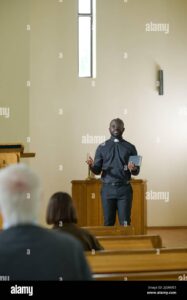 Preaching without notes gives you physical freedom. When I moved to this style, I moved out from behind the pulpit so that my whole body was communicating, not just my voice. There are those who will say that this is a distraction from the “Word”. But, as one person defined what we do, he said, Preaching is God’s truth communicated through a person.
There is also a spiritual freedom that comes from preaching without notes. I’ve had it happen occasionally that I’ll all of a sudden have a new idea come to mind or a new illustration. Of course, I have to do a quick evaluation of whether this is from God or not. At the beginning of the next post I’ll tell you a story about that.
Conclusion
So, if you want to communicate more effectively, begin the process of preaching without notes. You might want to start slowly, with fewer and fewer notes each time you preach. I suspect you will like the results both in your engagement with the Word and your effectiveness with your audience. For your further reflection, here is another view of someone who preaches without notes

