

How To Preach Without Notes

How to Preach Without Notes
We turn now away from the key skills for great preaching that we have been considering to the subject of how to preach without notes.
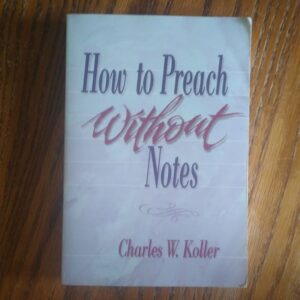 Last week I visited family in another state. On Sunday, we went to church with the family. I’ve been in that church before, and listened to their preacher before, but this time it struck me that he read his message. Generally speaking, I’m not opposed to someone wording a message well, but this time I was blown away by several things: He used very few gestures, because he held onto his manuscript; also, he rarely had any eye contact with his listeners. It’s as a result of that Sunday experience that this and the next couple of posts are going to focus on the theme: how to preach without notes to your congregation. A great resource on this subject is the book How To Preach Without Notes, by Charles W. Koller.
What Preaching Without Notes Is Not
Preaching without notes doesn’t mean that you don’t prepare. In fact, preaching without notes likely means that you will have to prepare more fully.
Preaching without notes doesn’t even mean that you don’t have some notes on the pulpit with you. I remember well the time I was invited to an older, conservative church to preach while I was in seminary. I was working toward preaching without notes even back then. Unfortunately, I came to a section of the message where I, all of a sudden, couldn’t remember what came next. I stood there in silence for what seemed like several minutes before I was able to identify the next phase of the message from the outline that I had in the pulpit.
In the present day I usually don’t have notes in the pulpit with me, unless I want to quote someone. However, I do have powerpoint going usually. The powerpoint gives me some broad pictures or words to work with that keep me on track.
Also, preaching without notes is not a memorization of the words you are going to use.
What Preaching Without Notes Is
First of all, it is a direct communication with your audience. Preaching without notes sets you free to use gestures more naturally and meaningfully.
Secondly, it means you internalize the message rather than memorize it. This is how Daniel Eng, professor of preaching at Western Seminary in Michigan puts it in an online article:
I stick to a familiar formula for my preaching outlines. This way, I know where I am in my sermon at all times.

Dr. Daniel Eng
I recommend that you find a formula for a biblical sermon that works for you: whether it be the old ‘Hook, Look, Book, Took,’ Andy Stanley’s ME, WE, GOD, YOU, WE, or something else you can remember. A key sentence or two to memory I will deposit in my memory bank,, but I don’t memorize my sermon word-for-word. I internalize my outline, which for me is focused on one point. Besides, the biblical text gives me most of my outline already. As long as I know my outline and where I’m going next, I can preach confidently without notes. Besides, sometimes the Holy Spirit directs me to add something during the sermon, which I can do with confidence, knowing how to return to my planned outline. Internalizing the message helps me be in the moment, and preach with the Spirit’s guidance.
Why Preach Without Notes?
In the next post we’ll look at suggestions about how to go about this in a way that will give you the freedom to move more freely into connecting with your audience. Knowing how to preach without notes can give you freedom and will impact your hearers.

