

Preach Toward Faithful Christian Response, Not Mere Commentary
Preach Toward Faithful Christian Response, Not Mere Commentary
 We are in a series of blog posts exploring the subject of how to preach the headlines. The first post in this series is found here. In this post we will explore the third principle from Lisa Thompson’s book on this subject: Preach toward faithful Christian Response, not mere commentary on the headlines of the day.
In other words, your sermon has to go beyond analysis or even commentary on the headlines of the day to a gospel informed response. Let’s think through how to do that, with Lisa’s comments in her book as a background.
Faithful Christian Response Must Be Rooted in the Gospel
It is relatively easy to get people to respond to a message that lifts up the headlines. Here in the United States, we’ve seen it in the past 5 years. People are ready to respond with anger, with rejection, and even something worse.
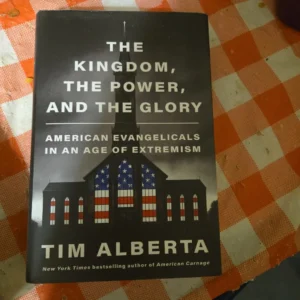 A recent book that considers this phenomenon in the US is The Kingdom, The Power and the Glory, by Tim Alberda. Alberda traces how the Evangelicals in the US moved away from the gospel to seek power, political power. Preachers convinced hearers that Christians that the government is persecuting Christians. They also encouraged hearers to fight, to take over political power and declare this aChristian nation. I always hesitate in this blog to critique fellow Christians, but the response encouraged was not a gospel-centered response. Some even endorsed violence as the way to grab and then hold onto power.
An Example
Here’s an example of a sermon that follows this principle, as produced by AI.
1. Naming the reality the headline reveals
The preacher begins by acknowledging the grief, fear, and anger the community feels. The headline is treated as a sign of a deeper truth: the world is not as it should be. The preacher resists speculation and speaks pastorally: “Many of us read this story and wondered if we are ever safe.”
2. Letting Scripture interpret the moment
The sermon turns to John 1:5: “The light shines in the darkness, and the darkness did not overcome it.”
Rather than forcing the text to comment on the event, the preacher shows how Scripture already knows this kind of darkness—violence, fear, and death are not new to God’s people.
3. Proclaiming what God has done in Christ
The preacher centers the sermon on the cross: Christ enters a violent world, absorbs its hatred, and refuses to answer it with more violence. The resurrection is proclaimed as God’s decisive “no” to death and despair.
This is the turning point of the sermon: the headline does not get the final word—God does.
4. Announcing hope without denial
The preacher does not claim that things will quickly improve. Instead, hope is grounded in God’s faithfulness: “Because Christ is risen, death does not rule history, fear does not define us, and violence will not have the last word.”
5. Inviting faithful response
Only after grace is proclaimed does the sermon invite response: the congregation is called to pray for the grieving, resist fear, practice peacemaking, and embody Christ’s presence in a wounded world—not to fix everything, but to bear witness to God’s kingdom.
Conclusion
Preach toward a faithful Christian Response when you preach the headlines. What can people do to be the light of Jesus Christ in the world in response to the headlines? Do this, and people in your congregation will experience God forming them into the people God wants them to be.

