
Let Scripture Set the Agenda, Not the News

Let Scripture Set The Agenda, Not the News
In the last post, we saw that when preaching the headlines that we should not preach the news, but preach the meaning of the news. In this post, we will consider the principle to let Scripture set the agenda, not the news cycle when preaching the headlines.
Warning Signs of the News Setting the Agenda
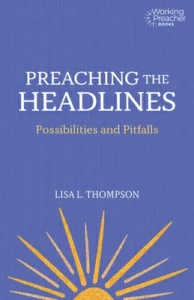 Thompson, in her book, gives several warning signs of crossing the line here. What are the signs that you are letting news set your agenda, not the overall themes of the Bible? Here are some of them:
- Sermons begin with breaking news and search for a verse to support a point
- Emotional tone mirrors outrage or fear found in media narratives
- Scripture functions as illustration rather than authority
- Congregations leave informed but not formed
Again, if you are going to preach the headlines, check your work regularly, assuring that you let Scripture set the agenda, not the news when you are preaching the headlines.
An Illustration of Beginning With the News, Not Scripture
What does it look like when you have crossed over the line? Let’s think through a real event, and how that might drive our preaching, rather than Scripture:
A News Story Breaks
-

News reporters outside Rob Reiner’s home
There is a big news story that breaks during the week. This week, as I write this in December, 2025, there were three events of violence that have driven the news cycle: Rob Reiner and his wife were murdered in their home. Their son has been charged with the crime; A gunman killed 2 and injured 9 in an attack at Brown University; 15 people were killed in an attack by a father and son at Bondi beach in Australia.
- The preacher begins his reflection, thinking that people will expect him/her to say something about such tragedy in the message: Here’s how the planning would look if you have stepped over the line:
the preacher begins not with Scripture, but with cable news commentary, opinion pieces, and trending posts. Emotions are running high. A central argument begins to form: This tragedy proves how broken our society has become.
Only afterward does the preacher search the Bible for support. A verse from the prophets is selected—“Woe to those who call evil good…”—not because it has been carefully exegeted, but because it sounds strong and fits the mood. The text is read, but not truly explored. Its historical context, theological movement, and gospel trajectory remain untouched.
The Sermon Takes Form
- The Sermon begins to take form:
The sermon opens with detailed descriptions of the event, naming perpetrators, statistics, and political failures. The emotional tone mirrors the outrage of the news cycle. Scripture appears briefly, serving as a moral exclamation point rather than a guiding voice.
The preacher offers confident explanations:
-
Why this happened
-
Who is to blame
-
What must be done
The sermon ends with urgency but little prayer, lament, or hope grounded in God’s redemptive work.
-
The Result of not letting Scripture set the agenda
The result of this approach is that, (I like the way Lisa Thompson puts it), “people are informed, but not formed.” We want people to be formed by God’s viewpoint on our world, not our own viewpoints. That’s why we let Scripture set the agenda, not the news cycle.
Conclusion
During the pandemic in 2020 I witnessed many preachers letting the news cycle drive preaching rather than letting Scripture set the agenda. Preachers complained about government overreach in asking churches not to meet, and did so in defiance of the mandates to stop the spread. That outrage then morphed into many concerns that drove the next election cycle. As a result, the influence of the Church in the United States has been damaged. People have fled the church, and pastors are now trusted about the same level as used car sales people.
So, as you think about preaching the headlines, be sure that you let the Scripture drive your preaching, not the news cycle.

